Introduction
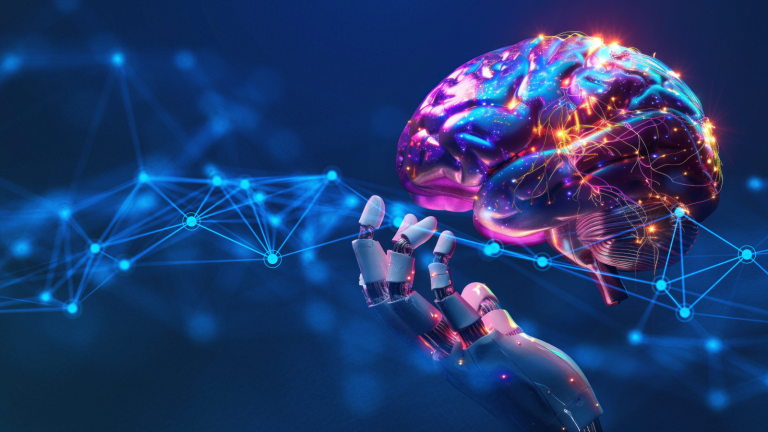
In the fast-evolving landscape of computing, traditional architectures like the Von Neumann model are reaching their physical and operational limits. As data generation surges exponentially and artificial intelligence (AI) becomes deeply integrated into every digital layer, the demand for energy-efficient, adaptive, and parallel computing models has never been higher. Enter Neuromorphic Computing — a revolutionary approach that mimics the structure and functioning of the human brain to process information. This emerging paradigm promises to bridge the gap between biological intelligence and machine efficiency, opening new frontiers in AI, robotics, edge computing, and autonomous systems.
What Is Neuromorphic Computing?
Neuromorphic computing is a field of computer engineering that emulates the human brain’s neural architecture using specialized hardware and algorithms. Instead of using binary logic and sequential processing, neuromorphic systems leverage neurons and synapses represented through electronic circuits to perform cognitive tasks. These chips are designed to process sensory data — such as vision, sound, and touch — more efficiently than traditional systems, enabling real-time learning and adaptation.
The Core Idea Behind Neuromorphic Design
Unlike conventional computers that separate memory and processing units, neuromorphic chips integrate both functions within a unified framework. This design eliminates the “Von Neumann bottleneck”, allowing simultaneous data storage and computation — just like how neurons communicate through synapses in the human brain.
Key Architectural Components
-
Artificial Neurons: Computational nodes that simulate how biological neurons fire and transmit signals.
-
Synapses: Connections between neurons that determine the strength and flow of information, often represented through resistive memory elements.
-
Spiking Neural Networks (SNNs): The foundation of neuromorphic computing; SNNs process data as spikes (discrete events) rather than continuous signals, making computation more energy-efficient and event-driven.
-
Memristors: A revolutionary hardware component that retains memory without power and behaves like biological synapses, enabling adaptive learning mechanisms.
Why Neuromorphic Computing Matters Today
1. Power Efficiency
Modern AI workloads demand immense computational power, resulting in high energy consumption. Neuromorphic chips operate on minimal power, consuming up to 1000 times less energy than GPUs or CPUs. Their event-driven nature ensures energy is only used when neurons are active, making them ideal for battery-powered devices and IoT ecosystems.
2. Real-Time Learning and Adaptation
Traditional systems rely on pre-trained models that cannot easily adapt once deployed. Neuromorphic architectures, on the other hand, support online learning, allowing systems to evolve in real time. This is essential for applications like autonomous vehicles, adaptive drones, and real-time speech recognition, where continuous environmental learning is crucial.
3. Scalability and Parallelism
Neuromorphic chips support massive parallelism, similar to how billions of neurons in the brain work simultaneously. This design allows the system to handle multiple sensory inputs concurrently, improving speed and responsiveness in complex tasks such as pattern recognition and decision-making.
4. Reduced Latency in Edge Devices
As data increasingly shifts from centralized cloud servers to edge devices, minimizing latency becomes critical. Neuromorphic systems can process data directly on devices like smart cameras or robots, without constant cloud communication. This reduces delays and enhances privacy, making them suitable for mission-critical applications such as medical monitoring or defense systems.
Applications of Neuromorphic Computing
1. Advanced Robotics
Robots using neuromorphic processors can perceive, learn, and react with human-like agility. For example, they can distinguish between objects, adapt to changing terrain, and even anticipate human actions — all in real time.
2. Healthcare and Neuroprosthetics
Neuromorphic chips have transformative potential in healthcare. They can power brain-computer interfaces (BCIs) that restore sensory or motor functions for paralyzed patients. Their ability to mimic neural signaling can also lead to the development of neuroprosthetic limbs that respond more naturally to brain commands.
3. Autonomous Vehicles
In self-driving cars, decision-making speed is everything. Neuromorphic systems process visual and spatial data faster and with lower power consumption, enabling safer navigation, object detection, and route optimization without cloud dependency.
4. Internet of Things (IoT)
Billions of connected devices need efficient, localized processing. Neuromorphic processors can analyze sensor data on-device, enhancing responsiveness and privacy while reducing reliance on remote data centers.
5. Cybersecurity
Neuromorphic architectures excel at recognizing subtle patterns, making them ideal for intrusion detection and anomaly analysis. They can learn to identify cyber threats dynamically, adapting to new attack vectors faster than traditional AI systems.
Challenges Facing Neuromorphic Computing
While the potential is immense, several challenges slow its widespread adoption:
-
Standardization Issues: There is no universal architecture or programming model for neuromorphic systems, complicating development and compatibility.
-
Software Ecosystem Limitations: Conventional AI frameworks like TensorFlow or PyTorch are not optimized for neuromorphic hardware, requiring specialized tools and languages.
-
Fabrication Complexity: Building chips that simulate billions of neurons and synapses with high precision demands advanced materials and nanotechnology.
-
Data Representation: Translating traditional digital data into spike-based signals requires new encoding methods that maintain accuracy and speed.
Leading Innovations in Neuromorphic Hardware
Several organizations and research institutions are pushing the boundaries of neuromorphic computing:
-
IBM TrueNorth: One of the earliest neuromorphic chips, capable of simulating over a million neurons while consuming just 70 milliwatts of power.
-
Intel Loihi 2: An advanced chip with adaptive learning capabilities, supporting millions of neurons and enabling flexible algorithmic development.
-
BrainChip Akida: Focused on edge AI, this chip supports on-chip learning and ultra-low power processing for embedded systems.
-
SpiNNaker (University of Manchester): A research project simulating a billion neurons to study large-scale brain modeling and computation.
The Future of Neuromorphic Computing
As research advances, neuromorphic technology is expected to integrate seamlessly into mainstream computing systems. Hybrid architectures that combine traditional CPUs, GPUs, and neuromorphic processors could emerge, balancing precision, performance, and energy efficiency. Over the next decade, neuromorphic chips may become foundational to cognitive AI, powering devices that can think, perceive, and evolve much like humans.
The evolution of neuromorphic computing may also blur the boundary between biological and artificial intelligence, leading to breakthroughs in adaptive automation, brain-inspired robotics, and human-computer symbiosis.
FAQs About Neuromorphic Computing
1. How does neuromorphic computing differ from traditional AI models?
Traditional AI relies on software-based neural networks executed on digital processors, while neuromorphic computing uses hardware that directly mimics biological neurons and synapses for more efficient real-time processing.
2. Can neuromorphic chips replace GPUs in AI applications?
Not entirely. While neuromorphic chips are more efficient for cognitive and sensory tasks, GPUs still excel in high-precision, large-scale numerical computations. A hybrid approach may dominate future AI infrastructures.
3. What programming languages are used for neuromorphic systems?
Specialized languages and frameworks like Nengo, PyNN, and Lava are used to design and simulate spiking neural networks for neuromorphic hardware.
4. How energy-efficient are neuromorphic processors compared to CPUs?
They can achieve up to 1000x better energy efficiency, depending on the application and workload, due to event-driven and parallel computation mechanisms.
5. What are the limitations of neuromorphic computing in commercial deployment?
Challenges include limited hardware availability, lack of standard tools, high production costs, and the need for new software paradigms.
6. Can neuromorphic chips be used in everyday devices?
Yes. Future smartphones, wearables, and IoT devices could integrate neuromorphic processors for on-device AI tasks like image recognition, gesture control, and voice interaction.
7. What’s the long-term goal of neuromorphic computing research?
The ultimate goal is to create machines capable of human-like perception, reasoning, and learning, paving the way for true artificial cognition.