12
For the better part of a half-century, industrial robotics occupied a narrow, predictable territory. Robotic systems were massive, hydraulic arms bolted to concrete foundations inside automotive assembly plants, sequestered behind heavy steel interlocks and optical safety curtains. Their primary virtue was brute-force repetition: welding the same seam, applying the same adhesive bead, or stamping the same sheet of steel thousands of times a day with microscopic tolerances. They were expensive to engineer, dangerous to approach, and so mechanically inflexible that reprogramming a single production line often required weeks of specialized engineering downtime.
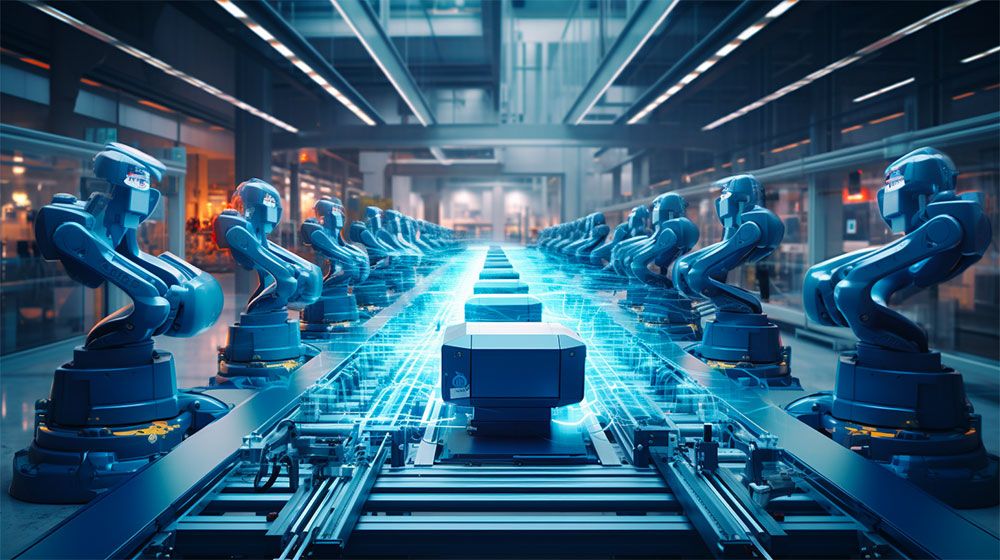
That rigid industrial footprint has shattered. Driven by rapid advances in machine vision, edge compute processing, tactile sensor arrays, and spatial artificial intelligence, robotics has moved far beyond heavy assembly plants into dynamic, human-centric commercial environments.
Today, automated systems navigate crowded fulfillment corridors, perform micro-incisions in hospital operating rooms, manage delicate agricultural harvests, and monitor high-risk commercial infrastructure. Automation is no longer an isolated, capital-heavy experiment reserved for conglomerate manufacturing. It has evolved into an agile, cross-sector operational capability that reshapes how modern enterprises manage throughput, mitigate risk, and scale daily operations.
The Collaborative Shift: Dismantling the Physical Barrier
The single most consequential design breakthrough in modern commercial robotics is the transition from segregated machinery to collaborative robotics, commonly known as cobots.
Traditional industrial robots were blind to their surroundings; if a human worker crossed their path of travel, the machinery continued moving with lethal kinetic energy. Modern cobots, by contrast, are engineered with high-resolution torque sensors in every joint, advanced computer vision, and reactive motor controllers that continuously monitor their external environment. The moment a collaborative arm encounters unexpected resistance or detects human proximity, it ceases movement in milliseconds.
This physical safety unlocks profound operational agility for mid-sized and enterprise businesses alike:
-
Footprint minimization: By eliminating bulky perimeter fencing and dedicated safety cages, businesses can integrate automated stations directly into existing, space-constrained production floors without expensive facility retrofits.
-
Low-code lead-through programming: Modern cobots rarely require proprietary script programming. Line operators can teach a robotic arm a complex welding or packaging path simply by taking its end-effector by hand and physically guiding it through the desired motions.
-
Agile changeover cycles: Rather than remaining locked into a single multi-year production run, collaborative workstations can be moved, retooled, and redeployed to packaging, palletizing, or quality-testing tasks within a single shift.
By bridging the gap between human intuition and mechanical precision, collaborative robotics transforms automation from a rigid capital fixture into a flexible tool that augments frontline workers.
Autonomous Mobile Logistics: Transforming Warehousing and Distribution
E-commerce has fundamentally rewritten corporate logistics expectations. Consumers and business clients now demand next-day delivery, personalized inventory packaging, and absolute order accuracy, placing immense strain on distribution centers already grappling with severe warehouse labor shortages.
To solve this fulfillment squeeze, logistics operators are trading static conveyor belts and legacy automated guided vehicles (AGVs) for autonomous mobile robots (AMRs):
-
Dynamic SLAM navigation: Unlike older automated guided vehicles that required magnetic floor tape or embedded electrical tracks to navigate, AMRs rely on Simultaneous Localization and Mapping (SLAM) powered by LiDAR and optical sensors. They build digital maps of their operational environments in real time, routing dynamically around misplaced pallets, temporary spills, and pedestrian foot traffic without stopping the entire line.
-
Goods-to-person picking architecture: Instead of requiring warehouse pickers to walk ten to fifteen miles per shift through cavernous fulfillment centers, automated shelving carriers lift entire inventory racks and deliver them directly to stationary human packing stations, multiplying individual fulfillment throughput by three-to-four-fold.
-
Cross-docking and trailer loading: Heavy-duty autonomous pallet jacks and robotic container unloaders handle repetitive, high-injury loading dock work, moving thousands of pounds of freight between trailer beds and staging lanes with continuous consistency.
By decoupling warehouse movement from fixed physical tracks, logistics enterprises create flexible fulfillment networks that scale capacity up or down to manage seasonal peak volumes without requiring massive real-estate expansions.
Precision Applications: Expanding Into Healthcare and Agriculture
The growing versatility of robotic end-effectors and vision models has unlocked commercial sectors where irregular shapes, biological fragility, and strict hygiene requirements historically rendered mechanical automation impractical.
Surgical Guidance and Clinical Operations
In healthcare, robotics is redefining both patient intervention and hospital logistics. Multi-articulated robotic surgical suites convert a surgeon’s hand movements into micro-movements inside the human body, filtering out natural human hand tremors and providing high-magnification stereoscopic visualization. These systems reduce patient incision sizes, curb blood loss, and shorten post-operative recovery timelines, allowing hospitals to optimize bed turnover rates.
Outside the operating suite, autonomous clinical delivery robots navigate sterile hospital corridors to transport chemotherapy pharmaceuticals, lab specimens, and surgical linens, freeing licensed clinical staff to dedicate their time to direct patient care.
Autonomous Precision Agriculture
Farming operations are adopting robotic platforms to combat severe seasonal labor crunches and tighter environmental regulations. Computer-vision-guided robotic weeders travel through field rows, distinguishing between commercial crops and invasive weeds at field speeds. Rather than broadcasting broad-spectrum herbicides across entire acreages, these machines fire micro-doses of targeted chemical treatment directly onto weed foliage—or destroy them mechanically using targeted laser pulses.
Similarly, soft-robotic gripper technologies enable autonomous harvesters to pick fragile produce, such as strawberries, citrus, and stone fruit, assessing fruit ripeness through multi-spectral cameras without bruising the crop.
The Economic Model: The Rise of Robotics-as-a-Service
Historically, acquiring robotics required substantial upfront capital expenditures (CapEx). A business had to fund system design, acquire expensive machinery, pay heavy integration fees, and retain specialized robotics maintenance engineers on the corporate payroll. For small-to-midsize enterprises, this capital requirement was an insurmountable barrier to entry.
The commercial market has resolved this financial hurdle through the Robotics-as-a-Service (RaaS) model:
-
Shifting from CapEx to OpEx: Under a RaaS agreement, businesses do not purchase the physical machinery outright. Instead, they deploy automation as an ongoing operating expense, paying monthly fees based on runtime, units picked, or square footage surveyed.
-
Included maintenance and tele-operation: The hardware vendor retains asset ownership, providing continuous remote diagnostic monitoring, software updates, and mechanical component replacements under unified service-level agreements.
-
Accelerated return on investment: Because implementation does not require large initial capital outlays, businesses achieve cash-flow-positive automation within months rather than years, dramatically lowering the financial risk of modernization.
RaaS has democratized advanced robotics, allowing independent regional manufacturers, third-party logistics warehouses, and specialty growers to compete directly on operational efficiency with global market leaders.
Redesigning the Workforce and Cultivating Technical Resilience
The expanding footprint of robotics predictably sparks conversations regarding worker displacement. While automation inevitably replaces repetitive, ergonomically damaging, and hazardous manual tasks, the practical reality of modern industrial deployment is rarely an empty warehouse or an unstaffed facility floor.
The true impact of enterprise robotics is workforce reconfiguration:
-
Manual material handlers evolve into robotic fleet controllers, monitoring dozens of automated systems from centralized tablet dashboards and stepping in only to resolve complex mechanical edge cases.
-
Assembly workers transition into automation technicians responsible for end-of-arm tooling adjustments, sensor calibration, and preventative diagnostic maintenance.
-
Safety incident rates drop as high-risk responsibilities—such as chemical vat cleaning, high-altitude structural inspection, and extreme heavy lifting—are systematically assigned to purpose-built machines.
Organizations that succeed with robotics do not treat the technology as a blunt instrument for headcount reduction. They view it as a productivity multiplier. By pairing intelligent machines with a well-trained, cross-skilled human workforce, modern enterprises build an adaptable operational engine capable of delivering exceptional quality, protecting worker safety, and maintaining commercial resilience across an unpredictable global economy.